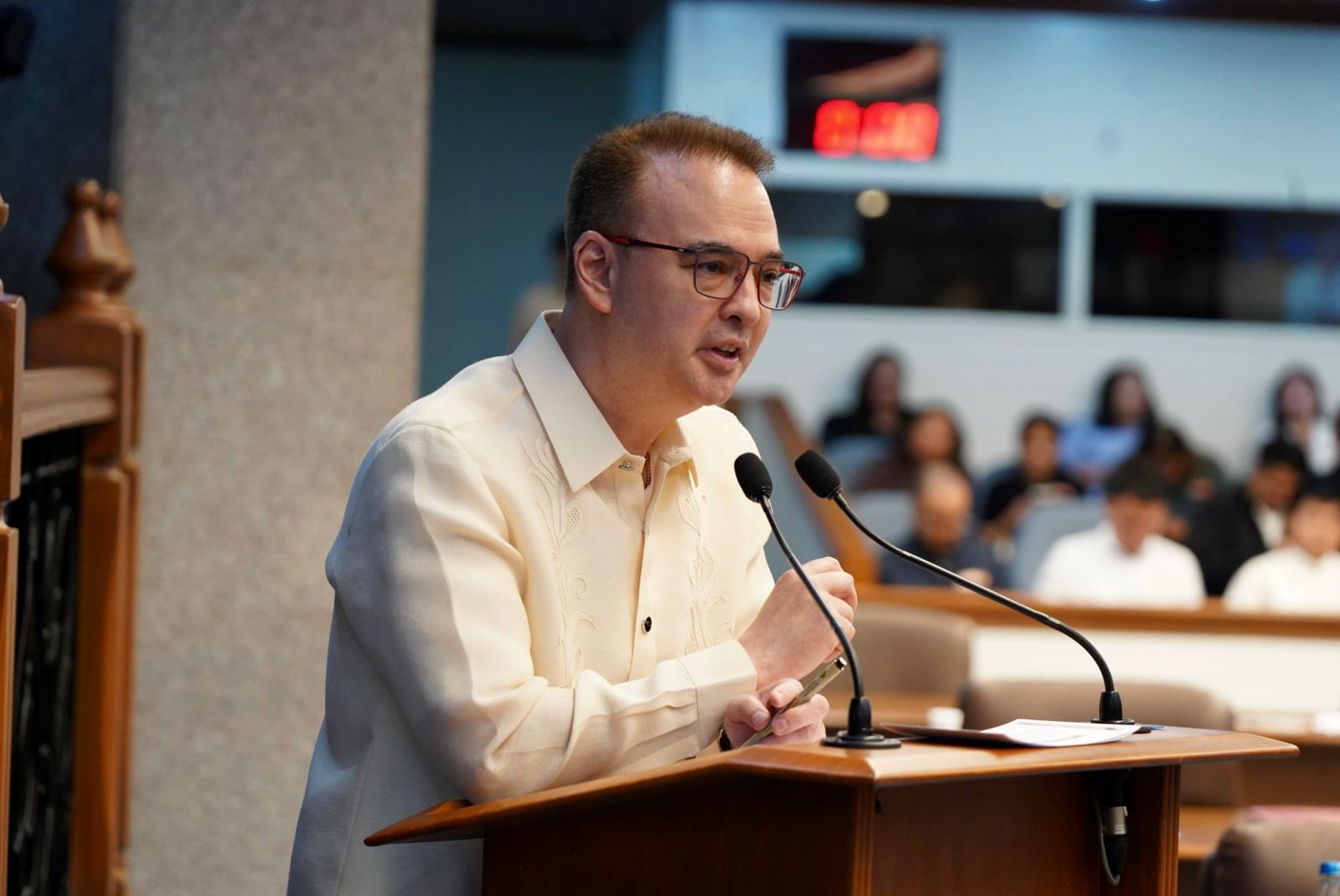
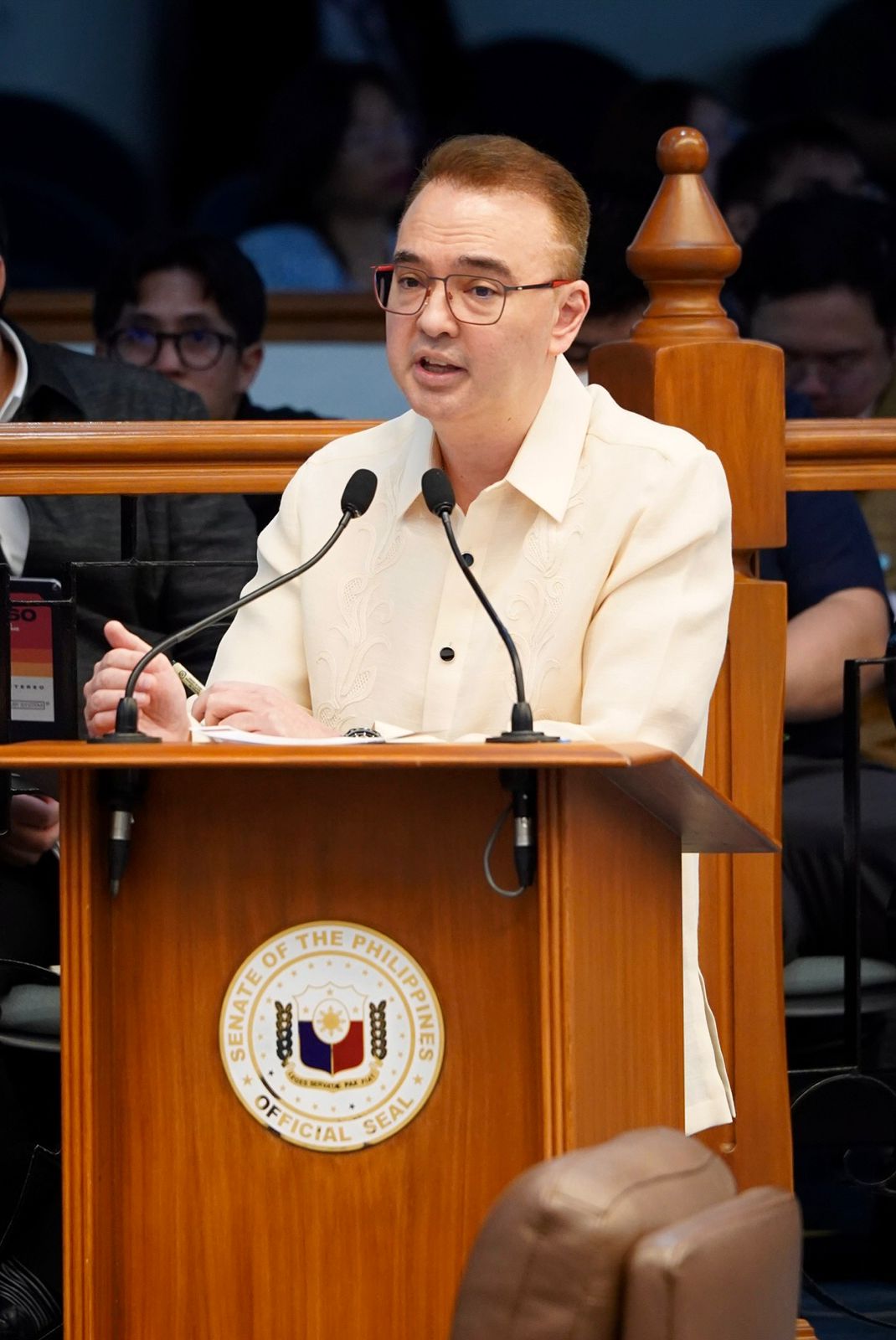
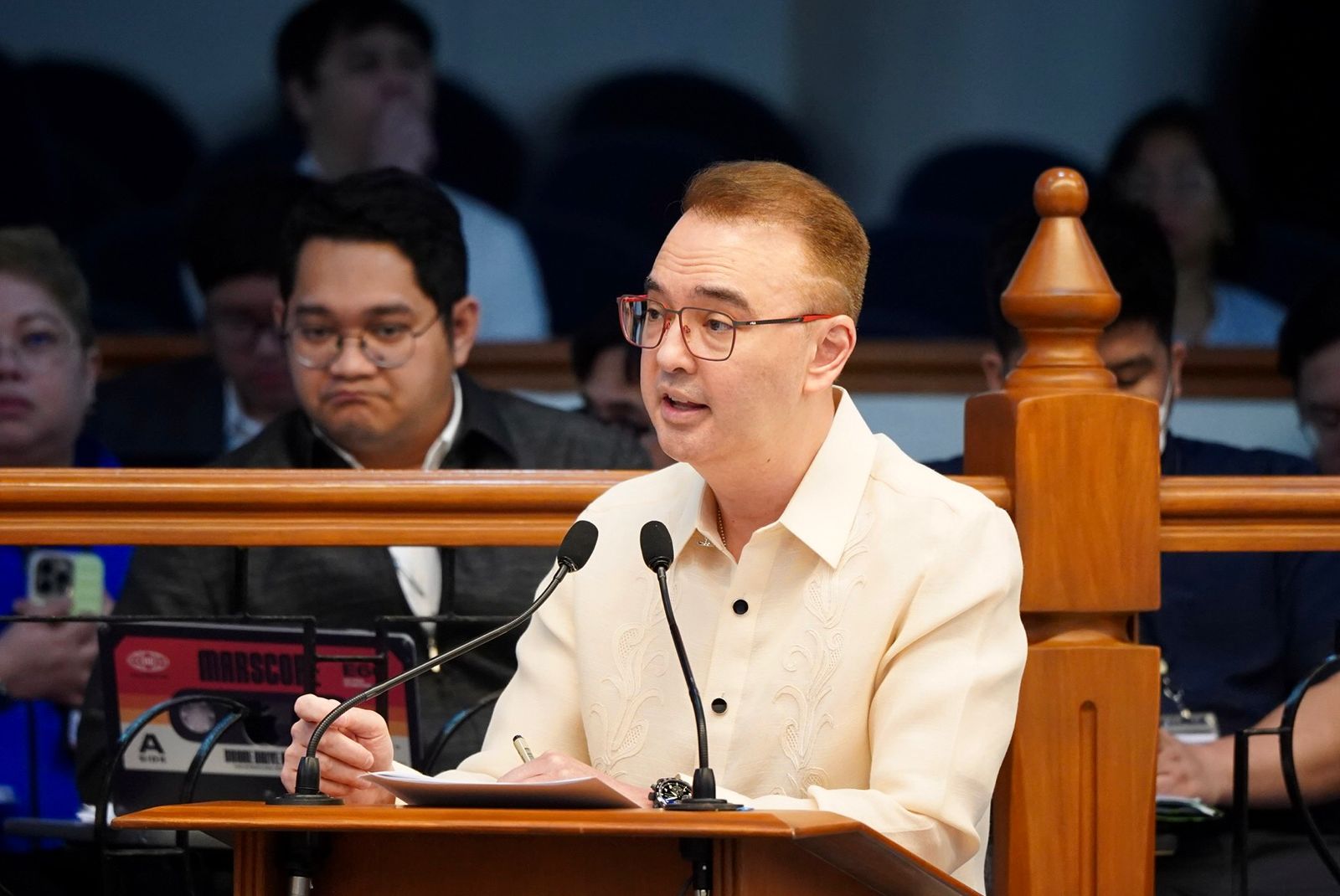
(0:00:00) Magandang hapon, Mr. Majority Leader, Mr. Senate President. Naintindihan niyo naman siguro yung take two, so thank you for this opportunity. Let me start with a biblical principle. Kung anong ating itatanim, yan ang ating aanihin. So 40 years ago, one of the issues that led our people to a peaceful, the first peaceful revolution in the world, was the fear of people that they can be arrested by anytime, anywhere, in the middle of the night in their own homes with a warrant that wasn’t issued by a judicial authority or the arbitrariness.
(0:00:51) This isn’t peculiar or hindi ito pang Pilipino lang. Actually, all throughout history, during the time that the monarchy ruled the UK and France, that is also the same reason why you have parliamentary immunity. Because if the monarchy did not want a member of parliament to speak on a certain topic, baka biglang arestuhin.
(0:01:19) So over hundreds of years, na-develop ang check and balance of how the state will be empowered to arrest a person or search his person or his household or his business, while also protecting his basic right, his right to liberty, life, and property that cannot be deprived without due process of law. Forty years later, or 39 years later, last year, we faced this issue, but now because the world is now a global city—dahil interconnected na—nag-evolve na po ito.
(0:02:07) So when the former president was issued a warrant of arrest from the ICC, the executive, as explained by several of their officials of the executive department—as explained by several cabinet members—used the Section 17 of RA 9851, which is to surrender. So, this is not actually the topic directly of this resolution because this resolution is prospective. This resolution deals with all Filipinos from the time that we give our sense or we express or communicate, articulate the sense of the Senate, that under our Constitution, it’s very clear, Section 2, Article 3, 1987 Constitution, the right of the people to be secure in their persons, houses, and papers and effects against unreasonable searches and seizures of whatever nature and for any purpose shall be inviolable.
(0:03:20) And no search warrant, or warrant of arrest shall [be] issue[d] except upon probable cause, to be determined personally by the Judge after examination, after oath or affirmation of the complainant and the witnesses he may produce and particularly describing the place to be searched and the person or things to be seized. So, simple po, two parts po ito.
(0:03:44) Unreasonable search and seizure inviolable. Bawal. So when is it not unreasonable? When a search warrant or a warrant of arrest is issued. And when can this be issued? One, only by a judge. And two, after that judge does examination under oath or affirmation of the complainant and the witnesses he may produce. I will not go to all of the jurisprudence because medyo rich na to, but all the lawyers in this hall and listening to us would agree that hindi ito hindi ito simpleng bagay sa…na inatas sa judge. All the jurisprudents will say that the judge has to personally determine, he has to look at the evidence, he has to examine it and believe that there is in fact probable cause. And probable cause again in two aspects. That there is a probability that the crime he is accused of was committed and secondly, the probability that the accused, he himself or she himself, committed that crime.
(0:04:56) Now comes the problem when you have an international warrant of arrest. So we have several treaties that deals with extradition. Diyan medyo klaro. Bakit? Nakalagay dito, transmittal, then yung arrest ng Pilipino, pero katulad po na nakita natin kay Congressman Jimenez, hindi po ba, na may proseso yung extradition, yung warrant of arrest, dadaan sa mga korte natin.
(0:05:32) And available ang korte sa kahit sinong Pilipino na naghahanap ng remedy doon. So ang problema po natin, ang interpretation ngayon ng Executive Department sa Section 17 RA 9851 ay basta’t nalang pwedeng ibigay or ipadala. At kung sila’y nagmamadali o medyo pas-pas at i-sakay na sa eroplano, walang reasonable time na tumakbo sa korte.
(0:05:58) If you look at exactly the same situation in the United Kingdom, tignan nyo po sa United Kingdom, kapag ka po arrest procedure, ICC request for arrest submitted to the Secretary of State. Transmittal of the ICC request by the Secretary of State to the appropriate judicial officer. The appropriate judicial officer to issue a warrant of arrest, provisional warrant, arrest by domestic law, the arrested person shall be brought before a competent court as soon as possible.
(0:06:33) And as arrested person may apply for bail. Tignan niyo po dun sa surrender. Sa UK po, pag sinurender, the competent court shall issue a delivery order for the arrested person to be delivered to the custody of ICC.
(0:06:48) In deciding to issue a delivery order, the court shall consider among others the person was lawfully arrested in pursuance of the warrant and whether his rights has been respected. So take note, Mr. President, dear colleagues, parating tinitignan yung karapatan ng akusado. The arrest person may ask for a review of the delivery order to waive his right to such a review.
(0:07:12) An arrested person may consent to be delivered up to, into the custody of ICC. So, kung ayaw niya pumunta na ng korte at siya ay sinu-surrender niya na sarili niya, pwede po. Then, the competent court may refuse to make a delivery order and demand the person arrested notifying the Secretary of State of its decision and grounds therefore. So, meron pong article, I’m not sure if it’s Business World, from a La Salle professor that is…
(0:07:43) Sorry, but it’s not only kulang sa knowledge, but it’s fake news na sinabi niya na maaapektuhan yung ating international standing. Hindi po. Kahit tignan niyo po sa ICC, nakalagay po doon na complimentary even the first president of ICC, Judge [Philippe] Kirsch.
(0:08:11) [He] explained kung bakit ito complimentary. Dahil nga, involved ang judicial authorities nung local or yung bansang yun. So, ito po ang sinabi po ni Judge Kirsch, “The statute of the ICC is a two-pillar system, a judicial pillar represented by the court and enforcement pillar represented by the states, which undertake a legal obligation to cooperate with the court through statute. Indeed, the ICC’s enforcement regime and its practical application constitute an essential part of any evaluation of ICC’s legitimacy”. So, Mr. President, if you look at another country—Canada.
(0:09:02) Pagka-arrest procedure, the ICC request for arrest is transmitted to the Minister of Justice. The Minister of Justice will authorize the Attorney General to apply for a provisional arrest warrant. The Attorney General will apply ex parte for a provisional arrest warrant before a judge. The judge will issue a warrant if the application meets prescribed criteria. The arrest warrant is executed by domestic law enforcement.
(0:09:27) The person arrested under provisional warrant may be granted provisional liberty based on judicial interim release order. Mr. President, what about surrender? In case of surrender, the minister may, after receiving a request for extradition and being satisfied that all conditions are met, issue an authority to proceed to the Attorney General to seek on behalf of the extradition partner a court order for committal of a person.
(0:09:52) Note, a person may at any time, after the issuance of an authority to proceed, consent in writing before a judge to a comital. So walang problema po ‘pag pumayag yung tao.
(0:10:02) But the judge shall, on receipt of authority to proceed from the Attorney General, hold an extradition hearing. Due process, Mr. President. Diba? Even si Eba at Adan eh. Nung kinain ni Eba yung forbidden fruit, tapos pinakain niya kay Adan, alam naman ng Panginoon eh, na kinain nila ‘to. But ano sinabi sa kanila?
(0:10:25) Adam and Eve, why are you hiding? So if you read Genesis, nandiyan yung essence ng due process, tatanungin mo muna. Because there might be issues that we do not know and will become moot and academic if you just put a Filipino on a plane and send him abroad. I mean, all of us here agree. Pagdating sa West Philippine Sea, not a single inch of territory, hindi natin pamimigay. Atin ito.
(0:10:51) Sana naman po pagdating sa kapwa Pilipino, ganun din. Atin ‘to. Kababayan natin to. Tao to. Hindi dapat basta’t sinu-surrender kahit sabihin mong meron po tayong treaty. At pag tinignan mo po yung treaty na yun, yung treaty na yun mismo, nire-recognize ang ating judicial authorities. Baka sabihin po natin, ‘well, Canada at UK yan’. Well, ang sagot ko po doon, ‘bakit po, iba ba ang rules ‘pag America, ‘pag UK, ‘pag Canada?’ So let’s go to somewhere nearer, South Korea. Sa South Korea po, the ICC makes a request for extradition of the Korean Minister of Foreign Affairs to diplomatic channels. The Minister of Justice reviews whether the extradition request complies with the Act of the Extradition Treaty and may either order the chief prosecutor of Seoul High Prosecutor’s Office to assign a prosecutor to request the court’s judicial review on the extradition, or choose not to order the request based on grounds to refuse extradition or other reasons minister considers appropriate to refuse extradition.
(0:12:00) Hindi ko na po babasahin dahil medyo mahaba, pero yung essence po ay nasa judicial authorities pa rin nila. Ganun din po sa surrender. Based on the court order, the Minister of Justice may make the final decision to release or extradite the requested person. So, Mr. President, ano po gagawin natin lahat kung bukas, February 26, ang headline sa lahat ng dyaryo natin? 25 PNP generals, 25 AFP generals, ang members of the Communist Party of the Philippines, several media practitioners and editors, several congressmen, senators, cabinet members, God forbid the President of the Republic of the Philippines ay na-issue-han ng ICC.
(0:12:49) And bigla na lang kukunin isasakay sa eroplano. And sasabihin niyo, Sir, hindi, umalis na kasi tayo sa Rome Statute. Hindi po. During the time na valid ang Rome Statute, nagkaroon po tayo niyan ng communist insurgency. So although the last few decades wala tayong nababalitaan na mass grave, paano kung biglang may magpakita na may mass grave d’yan at tinuro yung iba sa kanila? Pwede na lang silang damputin at dalhin sa Hague? O paano yung Marawi?
(0:13:19) Paano kung meron na video na dun sa bombahan tapos sinabi, civilian ‘to, hindi ito military target. Hindi nila pinakita na may nagtatagong mga rebelde dun sa school na yun. Nabomba yung school na yun. Nag-issue yung ICC. Papayag tayong arestuhin na lang basta-basta ang ating mga men and women in uniform? Ang ating mga senador, ang ating congressmen? What if the President of the Republic of the Philippines today was Senator Bato or Senator Bong Go? And then naglabas ngayon [warrant of arrest], pwede na lang silang -damputin na lang, they cannot go to court?
(0:13:59) Mr. President, nakakalimutan po ng marami na tumutuligsa sa stand ng mga na to-go-to court first is that sovereignty is an essential part of international relations and international law. Pag sinabi natin general accepted principles of international law, kasama po doon ang pagrespeto sa sovereignty. Ang problema po ng Pilipino ay problema ng Pilipino.
(0:14:28) Pero yes, may mga crimes against humanity na problema ng buong mundo. Pero mismong Rome Statute ang nagsasabing, sandali lang, kung ginawa sa Pilipinas yan at kaya niyo sa Pilipinas, sa inyo muna.
(0:14:39) But again, Mr. President, hindi po yan ang substance ng resolusyon na ito. Hindi po si dating Pangulong Duterte na ngayon na po ay gumugulong na po at meron confirmation of charges. Hindi rin pinag-uusapan po dito whether or not we should join or rejoin the ICC. Ang pinag-uusapan dito ay simple, issue 40 years ago, issue din po ngayon.
(0:15:05) ‘Pag may biglang aarestuhin, kailangan yung a-arestuhin na yun ay may pagkakataon pumunta sa Philippine courts to seek remedy. If you look at the International Convention on Civil and Political Rights, nandun din po ito.
(0:15:30) So, it’s part of the generally accepted principles of international law. So Mr. President, let me just say it one more time because I know we have a lot of strong feelings about the drug war, about the hearing, clear yung issues ng both sides. Hindi po yun ang nilalaman ng resolusyon na ‘to. Ang nilalaman ng resolusyon na ‘to, simple lang. ‘Pag may warrant na hindi issued by a Philippine judge, kailangan po dumaan sa korte yan, kung hindi unconstitutional yan.
(0:16:01) At kailangan ang bawat Pilipino na may tanong at nagse-seek ng remedy ay pwedeng makapunta sa korte ng ating inang bayan. So thank you for this opportunity, Mr. Majority Leader, and if there are any interpolations, I’ll be more than happy to try to answer our colleagues’ questions.